
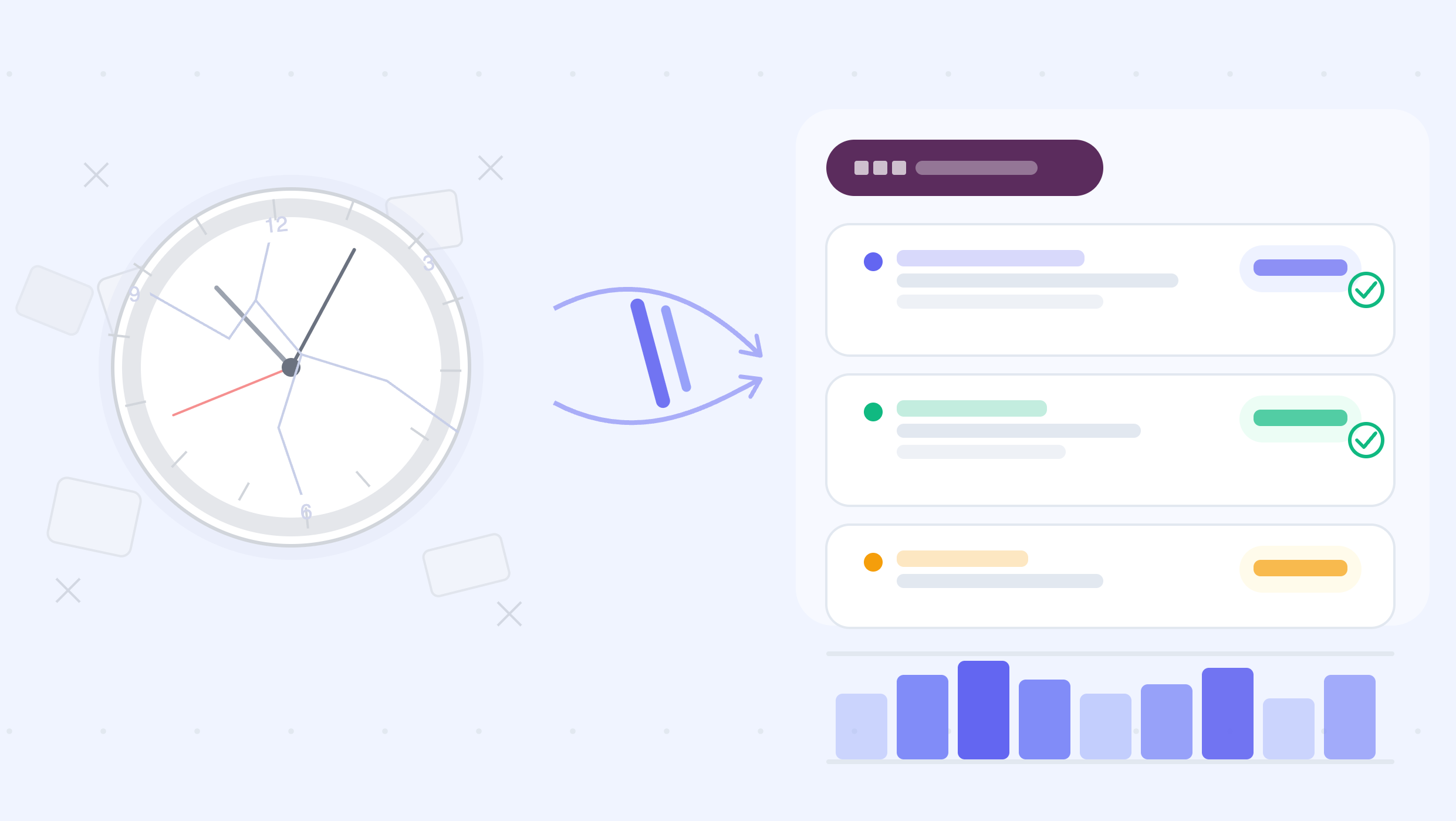
Nobody likes time tracking.
Employees complain it’s tedious.
Managers complain the numbers are inaccurate.
Executives complain they still can’t understand where time actually goes.
Yet companies continue investing thousands of pounds every year into increasingly sophisticated time-tracking software, hoping that the next dashboard, report, or AI-powered feature will finally reveal the truth.
It rarely does.
The biggest problem isn’t the software.
It’s that most businesses are trying to collect information long after the work has already happened.
And memory is a terrible project management tool.
The future of employee time tracking isn’t about making people fill in prettier timesheets.
It’s about capturing work where work already happens.
For millions of teams today, that’s Slack.
Traditional Time Tracking Is Built on Human Memory
Imagine asking someone on Friday afternoon:
“What exactly were you doing between 10:15 and 11:40 on Tuesday?”
Most people can’t answer.
Not because they’re dishonest.
Because they’re human.
Yet this is exactly how most companies expect timesheets to work.
Employees finish an entire week of meetings, messages, context switching, problem solving, customer calls, documentation, bug fixes, planning sessions, and emergencies…
…then somehow reconstruct every minute afterward.
The result?
Not data.
Stories.
Why Timesheets Become Fiction
Nobody intentionally creates inaccurate timesheets.
The inaccuracies happen because our brains simplify the past.
Employees round numbers.
“I probably spent two hours.”
“I think that meeting lasted an hour.”
“It was most of the afternoon.”
Multiply that by:
- 50 employees
- 5 workdays
- 52 weeks
And suddenly your productivity reports are built on educated guesses.
That’s why organizations often discover huge differences between estimated project hours and actual delivery costs.
Time Tracking Creates Extra Work
Here’s the irony.
Time tracking is supposed to improve efficiency.
Instead, it often creates another task employees have to remember.
Open another app.
Find the project.
Start the timer.
Forget the timer.
Correct the timer.
Submit the timesheet.
Answer questions about the timesheet.
Managers spend hours chasing missing submissions instead of reviewing meaningful work.
Employees spend mental energy maintaining the system instead of completing the work the system exists to measure.
The process becomes administrative overhead disguised as productivity.
The Real Cost Isn’t Payroll
Many businesses justify time tracking because they need payroll.
Fair enough.
But payroll only needs totals.
Businesses need something much more valuable:
- workload visibility
- project forecasting
- capacity planning
- resource allocation
- delivery estimation
- productivity insights
Traditional time tracking rarely provides these because the underlying data is incomplete.
A perfect-looking report generated from inaccurate inputs is still inaccurate.
Context Switching Makes Manual Tracking Impossible
Modern work isn’t linear.
An employee might spend one hour doing:
- replying to Slack messages
- reviewing a pull request
- attending a customer meeting
- updating documentation
- answering urgent questions
- switching back to development
- helping another department
- fixing a production issue
Was that six separate tasks?
Ten?
Fifteen?
Nobody remembers.
Especially after hundreds of interruptions every week.
Knowledge work has become fragmented.
Manual time tracking hasn’t caught up.
The Biggest Problem Is Leaving Your Workflow
Every extra click reduces compliance.
This isn’t speculation.
It’s basic human behaviour.
If recording time requires opening another website, another application, or another browser tab, people delay it.
Then forget it.
Then estimate later.
Every additional step decreases data quality.
The less friction, the more accurate the information.
Which raises an obvious question.
Why are companies asking employees to leave the place where they’re already working?
Slack Has Become the Modern Workplace
For many organizations, Slack isn’t just messaging software anymore.
It’s where work begins.
Projects are discussed.
Meetings are organized.
Questions are answered.
Approvals happen.
Incidents are managed.
Announcements are shared.
Daily stand-ups take place.
Collaboration already lives inside Slack.
Time tracking usually doesn’t.
That disconnect creates unnecessary friction.
Time Tracking Works Better Inside Slack
Imagine logging work without changing applications.
No searching for projects.
No forgotten browser tabs.
No complicated timers.
Simply record work from the same conversations where the work actually happens.
That’s why Slack-native time tracking has become increasingly popular with:
- software teams
- marketing departments
- agencies
- consultants
- remote teams
- customer support
- operations teams
Instead of interrupting workflow, it becomes part of workflow.
Better Data Starts With Better Habits
The best productivity systems don’t rely on motivation.
They rely on convenience.
When logging time takes only a few seconds inside a familiar workspace, people actually do it.
That creates:
- more accurate work logs
- better project forecasting
- cleaner client billing
- improved workload balancing
- fewer administrative reminders
Small improvements in consistency compound into dramatically better reporting.
Managers Don’t Need More Reports
Most managers already have too many reports.
What they lack is trustworthy information.
Knowing a project exceeded its estimated hours is useful.
Knowing why it happened is valuable.
Accurate time tracking helps answer questions like:
- Which projects consistently exceed estimates?
- Which teams are overloaded?
- Where are recurring bottlenecks?
- Which clients require significantly more support?
- Which meetings consume the most productive time?
- Where can automation save hours every week?
Those insights drive better decisions than another colourful dashboard ever could.
Remote Teams Need Visibility, Not Surveillance
One reason time tracking has earned a bad reputation is because it’s often associated with employee monitoring.
Screenshots.
Mouse tracking.
Keystroke logging.
Webcam activity.
These tools measure presence.
Not productivity.
Modern distributed teams need transparency without surveillance.
Employees should be able to communicate how their time is spent without feeling constantly watched.
That’s a healthier relationship with time tracking.
The Future of Time Tracking Is Invisible
The most effective technology eventually disappears.
Think about cloud storage.
Online banking.
Digital payments.
They’re powerful precisely because they don’t interrupt your day.
Time tracking is moving in the same direction.
Instead of asking employees to remember another task, the best systems integrate naturally into existing workflows.
The less people have to think about tracking time, the more reliable the data becomes.
Ironically, the best time tracking software feels like you’re hardly using it at all.
Final Thoughts
Time tracking has never really failed because people dislike tracking time.
It fails because most systems ask employees to stop working in order to prove they were working.
That contradiction has existed for decades.
As more organizations centralize communication inside Slack, it makes sense for time tracking to live there as well. Rather than forcing employees into separate timesheet applications, Slack-native tools reduce friction, improve adoption, and create more accurate records with far less effort.
If your team already collaborates in Slack, using a solution like Time bot for Slack can make time tracking feel like a natural extension of daily work instead of another administrative chore. By keeping work logging inside the conversations where projects actually happen, teams gain better visibility into time spent, managers receive more reliable data, and everyone spends less time filling out timesheets and more time doing meaningful work.



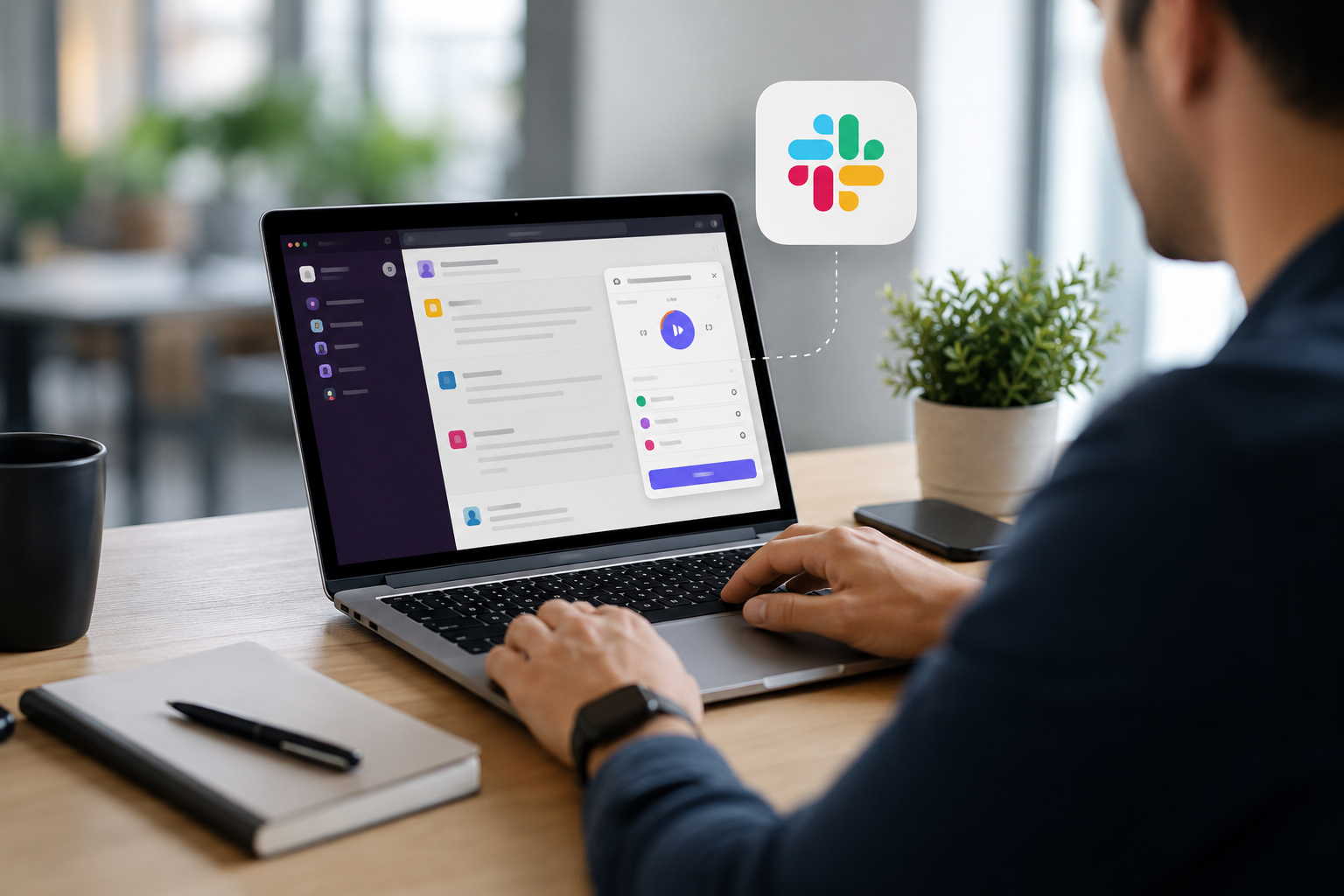 How to Track Time in Slack (Without Leaving Your Workflow)